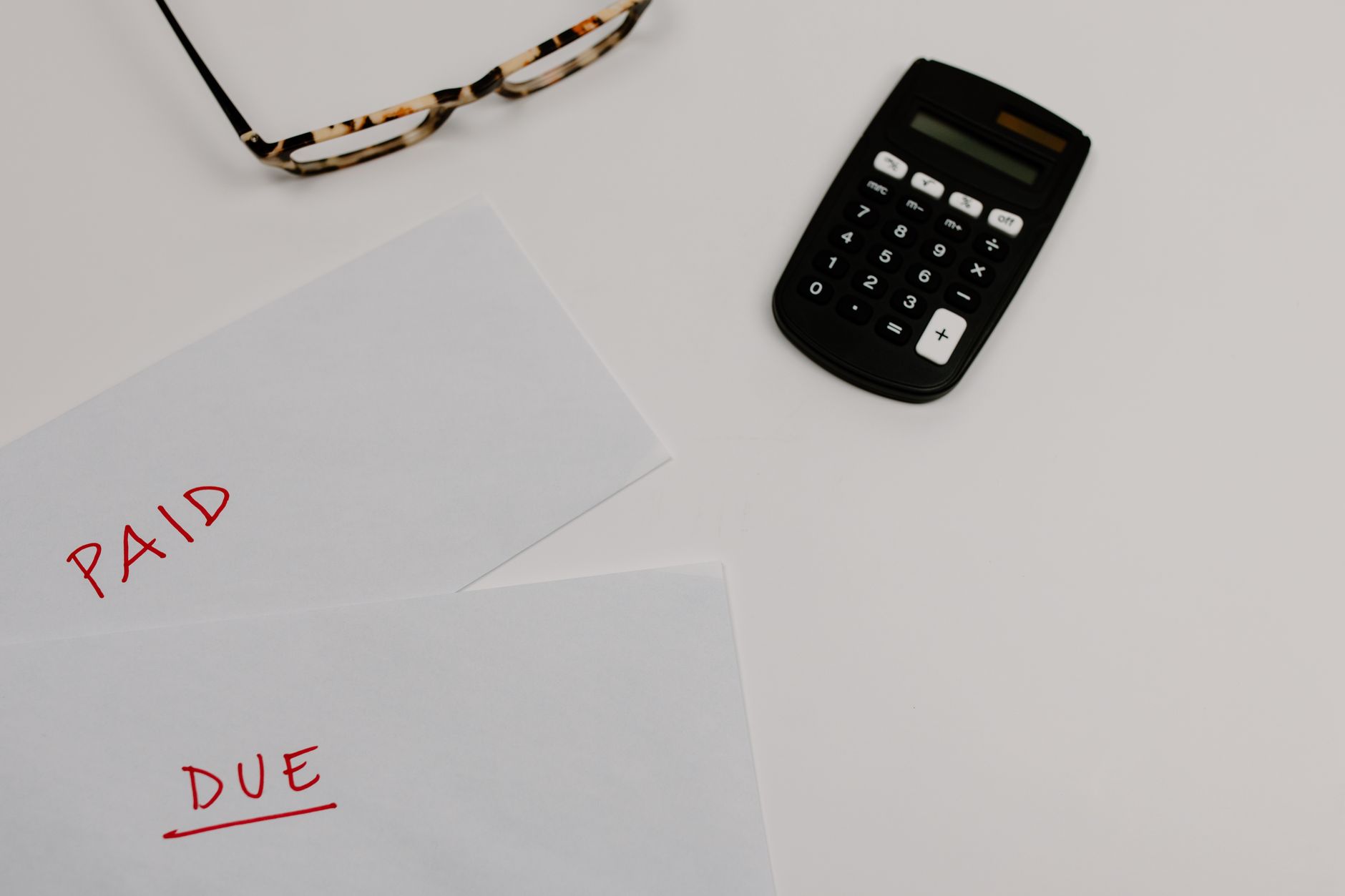
A filed bill can still become a late bill.
The electric bill sits neatly in a folder, but its automatic payment is set to leave the account the day before payday. The paperwork is in order; the account may still be overdrawn.
A useful organizer shows each bill’s due date, expected withdrawal date, amount, and payment status together. Those dates can differ: a card payment may be scheduled before its deadline but take longer to appear at the bank. Checking upcoming withdrawals against the available balance reveals shortfalls early. Marking a payment complete only after confirmation also keeps a scheduled payment from being mistaken for one that has cleared.
Choose by the problem that keeps recurring


-
A monthly view worth checking
A useful monthly spread makes upcoming due dates visible at a glance. The Large Monthly Bill Payment Checklist Notebook is the writing-space option; the Compact Colorful Monthly Bill Payment Planner is intended for a smaller footprint.
Look forDates readable in the place the organizer will be checked.AvoidA layout that hides deadlines among completed payments. -
A complete payment trail
Each bill needs room for its due date, amount, payment status, and confirmation number or transaction date. A scheduled payment should remain visibly pending until it clears; a checkmark alone cannot show that distinction.
Look forSeparate space for scheduled, paid, and cleared details.AvoidMarking an expected withdrawal as finished. -
Records versus paperwork
The Four-Year Family Bill Tracker Notebook suits households wanting a longer payment history. The Pocketed Spiral Bill Organizer for Busy Families and Current Bill Organizer with Pockets and Stickers are aimed at keeping paper bills close, but pockets do not replace a deadline view.
Look forThe needed balance of dated records and document storage.AvoidChoosing pockets as a substitute for tracking. -
A fit confirmed before purchase
Check sample layouts, physical dimensions, pocket capacity, and current price before ordering. A compact book that cannot hold the required details—or a large one left in a drawer—will not help.
Look forUsable space and storage at an acceptable price.AvoidAssuming the product name guarantees capacity.
Four-Year Family Bill Tracker for spotting changes over time
Best for long-term household payment tracking
This paper notebook suits households that want to keep several years of bill payments in one place. It provides 960 billing records across four years, with fields for due dates, amounts due and paid, unpaid balances, and paid or auto-paid status. Monthly overviews and yearly summaries add room to review household finances beyond individual bills.
- Four years of entries make it possible to compare the same bill across annual renewal cycles.
- Separate amount-due, amount-paid, and unpaid-balance fields help document partial payments.
- Yearly summaries support a broader review of household costs.
- A paper record does not send due-date alerts or confirm that an automatic payment cleared.
- Spotting price increases depends on entering charges consistently and comparing earlier records.
Large Monthly Bill Payment Checklist Notebook for a shared household desk
02
Roomy pages make bill details easy to review
This 100-plus-page notebook gives households a paper checklist for monthly charges, with fields for the amount due, due date, paid date, amount paid, unpaid balance, and notes. Its large pages suit a household where several people need to read and update the same record.
A useful convention is to enter the due date as soon as a bill arrives, write scheduled for 13th in the notes when a payment is arranged, and fill in the paid date only after the withdrawal appears in the account. That keeps an instruction to pay from looking like money that has already left. For a partial payment, the unpaid-balance field keeps the remainder in view.
- Large pages leave room to read bill details and handwritten updates at a glance.
- Separate amount-paid and unpaid-balance fields help track partial payments.
- More than 100 pages provide space for an ongoing household record.
- There is no dedicated scheduled-payment field; that status needs a consistent note.
- The large format is less convenient to carry than a smaller notebook.
- Entries still need to be checked against account activity before being marked paid.
Choose this notebook when desk readability matters more than portability. Keep it in one agreed location, use the notes field for scheduled payments, and reserve the paid-date field for withdrawals confirmed in the account.
Yaridar’s compact bill checklist for checks away from the desk
A colorful spiral-bound option in a compact size
At 5.8 × 8.5 inches, this spiral-bound monthly bill tracker is suited to a small workspace or a quick bill check at the kitchen counter. Its colorful pages provide a place to record bills, due dates, amounts, and payments. It costs about $8.
- Compact format is easy to move between the desk and wherever bills are opened.
- Colorful pages can support a consistent status key: one mark for upcoming, another for scheduled, and a third for cleared.
- Spiral binding lets the notebook lie open while payment details are checked.
- Colorful printing does not establish whether the pages have separate fields for scheduled and cleared payments; check the page preview before relying on the layout.
- Inspect the writing space for irregular bills, partial payments, and confirmation numbers. If it is tight, keep those details in a separate record.
Busy Family Bill Organizer for bills that arrive on paper
Keep bills and due dates together at a glance
This spiral-bound organizer suits households that receive paper statements alongside notices requiring a decision or payment. Its 12 pockets can be labeled by month, with a chart on each pocket for the bill name, amount, due date, and date paid. An insurance renewal notice, for example, can stay beside the month’s entry so the deadline is easy to verify against the original document.
- Monthly pockets keep statements and follow-up notices close to their recorded due dates.
- The spiral binding lays flat when entering dates and amounts.
- cons»: []}}
- unit_summary»:
- b16»: { } }
- A pocket full of unfiled mail makes the chart less reliable; each notice needs its own entry or an explicit follow-up note.
- The date-paid field does not distinguish a scheduled payment from one that has cleared.
Current Bill Paying Organizer Book for active paperwork
Adds roomy storage for statements and receipts
Current’s spiral-bound book is a place to keep statements and receipts close while bills are being handled. Its 14 pockets and 32 label stickers suit a household that wants paper sorted by status rather than filed away immediately.
One workable setup is to label pockets Unpaid and Completed, then move each statement only after the payment clears. Write the due date in a calendar or bill checklist and check it against the scheduled payment date; a labeled pocket shows where the paper is, not when money will leave the account. Move older completed bills to a separate archive so current items remain easy to spot.
- 14 pockets leave room to separate active statements and receipts.
- 32 stickers allow labels to match a household’s filing routine.
- Spiral binding and coated cover suit regular handling.
- Pockets do not provide an at-a-glance due-date schedule.
- Completed paperwork needs periodic archiving to keep active bills visible.
Keep the next month’s payments in view
-
Enter bills as they arrive
Record each bill under its due month, with the due date and expected amount. If the amount varies, use the latest notice rather than last month’s figure; keep the notice nearby until the charge is verified.
-
Choose a payment date, not just a deadline
Add a separate date for sending the payment or scheduling the withdrawal. A bill due on the 18th may need to be paid after payday on the 10th, especially when mailing a check or allowing for bank processing. See how to budget when paydays and due dates differ if several bills fall between checks.
-
Keep automatic payments on the list
Mark autopay as scheduled, with its withdrawal date and expected amount. It still reduces the account balance, and a changed charge or expired card can interrupt it.
-
Check what actually cleared
After the bank posts the transaction, record the cleared date and actual amount. A payment confirmation or scheduled-payment notice is not proof that funds left the account.
-
Review the next month before it starts
Carry forward recurring bills, check for annual or quarterly charges, and flag amounts still unknown. Compare planned withdrawals with expected deposits before committing spare cash elsewhere.
A shared organizer works only if both people treat it as the single record. Keep it in one agreed location, whether that is a notebook on the household desk or a shared digital list. If a paper bill arrives, put it in the organizer’s pocket and enter its due date on the tracking page; a notice tucked away is not a visible deadline.
Assign a named owner to every payment, even when either person could pay it. The owner schedules it and records the expected withdrawal date; the other person should not schedule a second payment without checking that entry. For bills paid automatically, name the person responsible for checking the bank account—not just the person who originally set up autopay.
Set a brief weekly check together, plus one before a cluster of due dates. Scan upcoming bills, payments marked scheduled, and withdrawals still uncleared. Mark a bill paid only after the bank shows it cleared, and record any failed payment or changed amount where both people will see it.
Frequently asked questions
A due date and the actual withdrawal date can differ, and autopay may leave before payday. Organizing paperwork alone does not prevent overdrafts.
Each bill's due date, withdrawal date, amount, source account and payment status, all in one place both partners can see.
Use one shared view of what is due, what is scheduled and what has cleared, and review it together regularly.
Choose the Large Monthly Bill Payment Checklist Notebook when missed dates are the problem: record due dates and use its notes field to distinguish scheduled payments from cleared ones. If paper statements go missing, choose the Pocketed Spiral Bill Organizer for Busy Families and file each notice in a labeled pocket. For a longer payment history that can expose changing charges, choose the Four-Year Family Bill Tracker Notebook.
Test the layout through one full billing cycle. Keep it only if any household member can immediately see what is due next, when payment is planned, and what has not cleared. That shared view supports organizing finances as a couple.