
The most useful page may be the one both parents can find fast.
When a newborn won’t settle after a feed, one parent may wonder whether to call the pediatrician while the other looks for a way through the night. A medical reference can help identify symptoms that need attention; a newborn-routines book can help divide feeding, soothing, and rest. Neither works as well if only one parent knows the plan.
Before birth, both parents can look up the same everyday question in each type of book, then agree who will check symptoms, who will take the next shift, and when to set the routine aside for the baby’s needs or medical advice.
Start with the question that matters most




Choose books by the decisions they help make
-
Match the book to the question
Pregnancy references help interpret prenatal changes and prepare questions for appointments; baby-care guides help with feeding, illness, and development. Relationship books help partners parent together as a couple by discussing conflict and responsibilities before sleep deprivation sets in.
Look forClear help with a decision both partners will face.AvoidExpecting one book to answer every kind of question. -
Test how quickly an answer can be found
A reference earns its shelf space when an exhausted parent can locate a symptom, age range, or next step without reading a chapter. Check the index, headings, and tables before buying.
Look forScannable guidance with clear limits on when to seek care.AvoidUseful facts buried in long narratives. -
Leave room for the baby
Moms on Call can provide a starting routine, but feeding cues, weight gain, and a clinician’s advice take priority over a clock. Treat any schedule as adjustable, not as a test of consistency.
Look forRoutines that can change when a baby’s needs change.AvoidRules that discourage responsive feeding or medical advice. -
Buy a pair, not a stack
Read one book together to prompt decisions—such as how to divide nights—then keep one targeted reference nearby. Choose a pregnancy guide before birth or the Mayo Clinic baby-care guide for the months after.
Look forOne shared read plus a reference for the current stage.AvoidSeveral overlapping guides that create competing instructions.
What to Expect When You’re Expecting: A reference for prenatal questions
01
Best-known guide for practical, week-by-week pregnancy questions
What to Expect When You’re Expecting is a broad pregnancy reference for couples who want to arrive at appointments with specific questions. Its coverage spans symptoms, food and exercise, work, testing, and labor, so it works best as a book to consult as concerns arise rather than one to read straight through.
A useful routine is for each parent to flag one question before a visit—for example, whether a symptom needs follow-up or what a screening test can tell them. Afterward, they can compare what each heard and write down any point that still needs clarification.
- Broad coverage makes it easy to look up an unfamiliar pregnancy concern.
- Question-led format helps turn reading into an appointment agenda.
- Useful across pregnancy, not just the first trimester.
- Its breadth can feel overwhelming when only a quick answer is needed.
- General guidance cannot account for an individual pregnancy or a clinician’s recommendations.
This is the book to keep close when a new symptom, test, or practical decision prompts a question. It is less suited to a short conversation about parenting styles; its value is helping both parents ask clearer questions and leave appointments with the same understanding.
Mayo Clinic Guide to Your Baby’s First Years: A reference to keep within reach
Expert-backed guidance from infancy through toddlerhood
The Mayo Clinic Guide to Your Baby’s First Years covers everyday care and development from infancy into toddlerhood, with month-by-month chapters and guidance on feeding, sleep, and health. It suits parents who want one reference available after the birth, when a question is more likely to arise between appointments than during a planned reading session.
Before delivery, both caregivers can bookmark the feeding and sleep pages and locate the guidance on symptoms and seeking help. They can agree where the book will stay, so neither has to search through chapters during a difficult first week. The goal is not to read it cover to cover: it is to find the relevant page quickly and use it to frame a clear question. A book cannot assess an individual baby. The baby’s clinician remains the source for advice about symptoms, feeding difficulties, weight gain, or whether care is needed.
- Covers practical care and development beyond the newborn stage
- Month-by-month organization helps parents find age-relevant guidance
- Mayo Clinic pediatric expertise provides a clinical perspective
- Broader scope may feel cumbersome for a single urgent question
- General guidance cannot account for an individual baby’s medical history
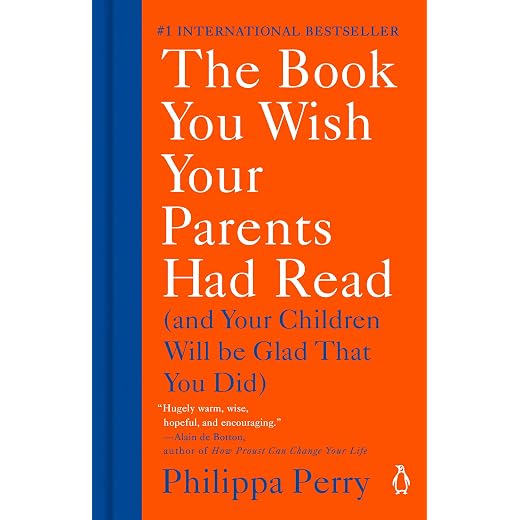
The Book You Wish Your Parents Had Read: A conversation starter about parenting patterns
Relationship-focused advice for understanding children’s feelings
Philippa Perry’s relationship-focused book asks parents to notice how childhood experiences and stress can shape their responses to a child’s feelings. It suits couples who want to discuss those patterns before sleep deprivation makes difficult moments harder to navigate.
Each parent can name one reaction they hope to handle differently—for example, withdrawing during conflict or becoming impatient when someone cries. They can then agree on a supportive response: ask whether help is wanted, offer a short break, or listen without correcting. That conversation can also help couples talk about the mental load before baby arrives, including who notices when the other parent needs relief.
- Gives couples language for discussing upbringing and emotional reactions.
- Encourages attention to children’s feelings without blaming parents.
- Useful for conversations about supporting a partner.
- Not a guide to feeding, sleep, or newborn safety.
- Reflective advice takes more discussion than a quick-reference manual.
This book earns its place beside a clinical reference because it addresses what a care manual cannot: the reactions parents bring into stressful moments. A useful outcome is a simple agreement about how each partner can offer help without automatically taking over.
The Simplest Pregnancy Book in the World: An illustrated starting point
A concise, illustrated approach to pregnancy and childbirth
For expectant parents who find dense pregnancy references hard to start, this illustrated guide offers a manageable way to learn the basics together. A short reading session can give both partners the same starting point for discussing pregnancy and childbirth. They can note anything that applies differently to their situation and bring those questions to a prenatal visit rather than trying to settle them from the book.
- Illustrations and concise explanations make short shared reading sessions practical.
- An accessible starting point for partners with different levels of pregnancy knowledge.
- cons 123 4543 3232 9393 9934 -3 9933 1 9999 4 4 9292929292 9292
- Simplified guidance cannot account for an individual pregnancy or medical history.
- Less suited to resolving detailed clinical questions than a fuller reference or prenatal clinician.
Moms on Call Basic Baby Care: A routine to discuss, not enforce
Practical routines for sleep, feeding, and newborn care
Covering birth through six months, Moms on Call Basic Baby Care lays out hour-by-hour examples for feeding, sleep, and everyday care. It suits parents who want a concrete routine to read side by side before deciding what might work in their household.
Use one sample day to assign jobs: Who prepares bottles or brings the baby to a nursing parent? Who handles diapers, cleanup, and the first stretch of rest? That conversation can also help parents plan how to split night feeds.
Treat feeding times and sleep stretches as examples, not targets for every newborn. Feeding needs vary with age, weight gain, and circumstances such as jaundice; a clinician’s feeding plan takes priority over the clock. Check sleep suggestions against current safe-sleep guidance: place the baby on their back in a separate, firm, flat sleep space without loose bedding. Stop swaddling when the baby shows signs of rolling.
- Hour-by-hour examples make an otherwise vague discussion about daily responsibilities concrete.
- Includes breast, bottle, and combination-feeding topics alongside routine care.
- Symptom guidance gives parents prompts for deciding when to call a doctor.
- A sample timetable may feel like a standard the baby must meet, particularly during unpredictable early feeding.
- Sleep and feeding instructions still need to be checked against current guidance and individualized clinical advice.
-
Pick one idea to try
After each reading session, write down one small experiment, such as keeping a diaper-change station stocked for a week. A trial is easier to evaluate than a promise to follow an entire routine.
-
Name one point to question
Mark any advice that depends on the baby’s age, feeding method, or medical history. Bring health questions to a clinician rather than settling them by comparing books.
-
Give the follow-up an owner
If the idea is to choose a baby carrier both parents can use, name one partner to check fit and weight limits before purchase. Record the owner and a date, not just the intention.
-
Make the shifts visible
After an overnight nursing feed, the nonfeeding partner can change and settle the baby, then cover the early-morning baby shift while the feeding partner sleeps. With bottles, partners can alternate complete feeds instead.
-
Set a reason to change the plan
Revisit the arrangement if recovery limits lifting, feeding takes longer than expected, or the baby’s hunger cues make the planned timing unworkable. Concerns about intake or weight gain warrant clinical advice.
A reading plan before the baby arrives
Start with one pregnancy book, not both. What to Expect When You’re Expecting suits partners who want a broad reference to consult as questions arise; The Simplest Pregnancy Book in the World works better for a quick, illustrated overview. Each partner can flag one question to bring to the next prenatal appointment.
Next, use The Book You Wish Your Parents Had Read to start one focused conversation: What tends to happen when either partner is exhausted or feels criticized, and what kind of support helps? Agree on a way to pause and return to a tense discussion.
Before birth, bookmark feeding, safe sleep, fever, and developmental milestones in the Mayo Clinic Guide to Your Baby’s First Years. Consider Moms on Call only if sample routines would help divide tasks; leave feeding and sleep timing open to the baby’s needs and clinical advice. The useful result is a few shared decisions and questions—not a finished reading log.
Frequently asked questions
A practical mix works best: a medical reference for symptoms that need attention and a newborn-routines book for feeding, soothing and sleep. Choose books both parents will actually use.
Reading together helps you agree in advance on how to divide night feeds, soothing and rest, so tired decisions are easier later.
Probably. Adjusting your plans to your baby is attentive parenting, not failed preparation. Keep questions for your pediatrician or family doctor.
For a practical book to keep close after birth, choose Mayo Clinic Guide to Your Baby’s First Years. Add The Book You Wish Your Parents Had Read if conversations about stress and family patterns need more attention; choose Moms on Call Basic Baby Care only if a sample routine would help.
Before birth, return to one book together. Write down three decisions it helped settle—such as who handles night tasks, how to seek feeding support, and when to call the pediatrician—and three questions for a clinician or later conversation. Adjusting those decisions to the baby is attentive parenting, not failed preparation.